Sunday, November 30, 2008
Death Hung Over Mumbai
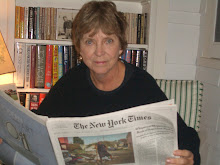
"Death hung over Mumbai on Saturday" is the one-sentence lead of a "wrap-up" story in The New York Times on my desktop this morning. Story was posted yesterday. The last few days we've seen stories reported almost minute by minute by cellphone and Blackberry, by "citizen journalists," professional journalists and the victims themselves. Those stories conveyed the horror and the chaos, but here traditional journalism -- old media, if you will, even though we are reading the story online -- helps us try to make sense of it all.

Saturday, November 29, 2008
Mumbai Attacked By Sea
India's 9/11 has dominated all news channels since late Wednesday when young men in jeans and t-shirts and AK-47 assault rifles began terrorizing Mumbai. Now that the fires have been put out, the last gunmen killed or apprehended and bodies counted, the question remains: Why Mumbai? Aljazeera points out that the terrorists reached the urban peninsula by boat -- "the first time that the sea route was exploisted for access" -- and suggests that the government's total reliance on technological intelligence-gathering may be why Indian intelligence agencies didn't anticipate an attack of this size and incredible organization. It is clear that intelligence officials across the world will have to develop better coordination to battle against such attacks, says the Aljazeera report, adding that the root causes of such assaults must be addressed. What message did the gunmen deliver?
Local News
Local news in a course about international news criticism? With the Internet, nothing is local. Everything is accessible everywhere. Well, almost. Internet social networks have put a new spin on what's news and who reports it. Just consider Facebook to which some of you belong. I typed in "Abu Dhabi" to search for groups and came up with over 500 possibilities, including commercial establishments, alumni organizations and sports and music fan clubs. I stopped browsing on Screen 52 with the Abu Dhabi Mar Dragon Boat Team. No, I didn't join any groups, but I can see how useful they could be for journalists or researchers wanting to get a feel for what goes on here or looking for sources. In fact, I used Face Book earlier this fall in interviews for my conference paper on the virtual community of the Coptic diaspora.
There's a ZU-related global group on Facebook, by the way: I was in Abu Dhabi with GlobCom 2008 where memories and photos are being shared.
There's a ZU-related global group on Facebook, by the way: I was in Abu Dhabi with GlobCom 2008 where memories and photos are being shared.
Friday, November 28, 2008
Mumbai
Access this article from The Wall Street Journal, one of the few "old media" companies that has a model for making money online. You have to be a paid subscriber to read online. As a subscriber, I can email stories to people for only a brief period of access. Looks as though I can share with you WSJ. Are you surprised that India has the largest Muslim population after Indonesia and Pakistan? Good background in this piece and an opportunity for you to see how yet another news organization covers international news. This story has all sorts of local ramifications. Which ones come to your mind?
Wednesday, November 26, 2008
Why Where Matters, Part II
The Somalian pirate story we have been following all semester gets more global each day. Yet at the same time closer to home. A Reuters news analysis in the IHT yesterday says the surge in piracy raises concern about terrorism in the sea lanes, which are even more vulnerable than air transport. Terrorists could raise money by holding ships for ransom or turn one into a floating bomb to send into a port just like in the pirate movies. "And an attack aimed at shutting down a major port like Singapore or disrupting a key shipping lane like the Strait of Hormuz, though which as much as 40 percent of the world's traded oil passes, could do real economic damage," the writer suggests. I suspect you know where the Strait of Hormuz is. Not so sure the same could be said of your peers in the U.S. In reading international news, you don't have to have an atlas at hand, but do goggle to brush up on your geography to understand the significance of what's happening.
Tuesday, November 25, 2008
Readers Have Their Say
This week we're exploring the Guardian website, which underwent a massive redesign in February, generating plenty of discussion among designers -- and readers. When Emily Bell, director of digital content for Guardian News and Media, blogged news of the transformation, 362 readers zapped back just what they thought. One reader raised the issue of navigability vrs eye-catching design. In a print edition, readers "navigate" by turning pages. Not so simple on the web. So how do we go directly to the football news was the first comment, which generated an extensive exchange among readers and Ms Bell. Overall, the comments were positive, but there's always someone who likes it the old way. Grumbled one reader: "Why on earth does the Guardian do this every now & then? We just get use to the site & then--out of the blue -- it is changed causing much chaos." How easy do you find navigating the site?
Subscribe to:
Posts (Atom)